
.svg)

The Dangers of Synthetic Food Are Not What They Seem
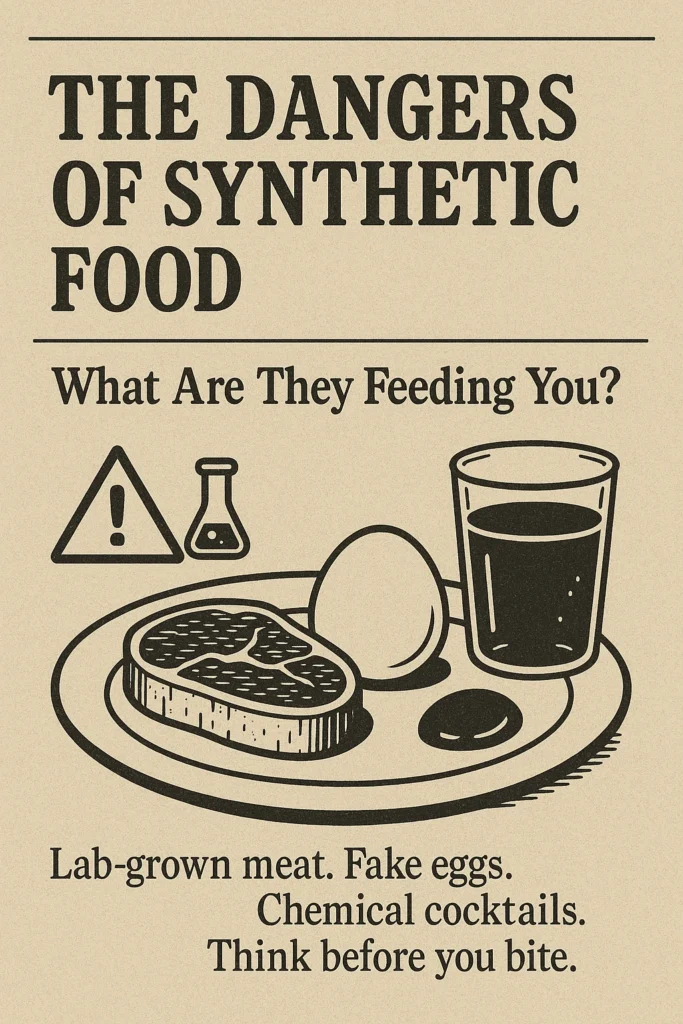
The dangers of synthetic food aren’t a sci-fi fantasy or tinfoil-hat nonsense—they’re already in your fridge. From flashy “low-fat” yoghurts to snacks with more numbers than ingredients, synthetic food has snuck into our lives, disguised as innovation. While it might promise convenience, taste, and shelf-life, what it actually delivers is far less appetising.
We’re sold the idea that this is progress. However, a closer look reveals something more troubling. It’s not just food—it’s a cocktail of artificial additives pretending to nourish us.
How Did We End Up Eating Fake Food on Purpose?
It didn’t happen overnight. First, food companies offered shortcuts—just add hot water! Then, they sweetened the deal, literally. Over time, real ingredients were replaced with synthetic fillers, colourings, and preservatives.
Because we wanted faster meals, they gave us ultra-processed substitutes. Because we craved stronger flavours, they engineered chemical taste bombs. All the while, profits soared, and health took a nosedive. Banned Natural Remedies
At first glance, it feels harmless. But dig deeper and you’ll see just how many health issues are tied to these factory-born “foods.”
Health Problems Caused by Synthetic Ingredients
Let’s talk about what’s really cooking. The dangers of synthetic food stretch beyond just calories. Many synthetic additives are linked to long-term health effects.
For instance, artificial sweeteners like aspartame and sucralose mess with your metabolism. Although they cut sugar, they may spike insulin, confuse your gut, and leave you more tired than before. Meanwhile, emulsifiers and preservatives—like BHT, BHA, and sodium benzoate—can trigger inflammation and gut issues.
Highly processed ingredients also tend to strip nutrients. Yes, they “fortify” foods later, but synthetic vitamins don’t always absorb well. This leaves your body full, yet still undernourished. Where do all the burgers come from?
Recognising the Dangers of Synthetic Food Before It’s Too Late
The bright packaging often hides the truth. It’s easy to miss the dangers of synthetic food when every box screams “high protein,” “plant-based,” or “gluten-free.”
Marketing makes these products sound healthy. In reality, they’re often loaded with lab-created ingredients that imitate food rather than nourish your body. Items like “natural flavour” or “stabiliser (E471)” may seem innocent, but they’re not part of any natural diet.
Always check the label. If you spot more than ten ingredients—or can’t pronounce half of them—it’s time to reconsider.
More than Just a Label Issue: Hidden Dangers of Synthetic Food
Many harmful ingredients don’t even sound threatening. Propylene glycol keeps cakes moist. Titanium dioxide whitens your bread. These chemicals aren’t there for nutrition—they’re there for looks and texture.
Worse, they often sneak into so-called “healthy” options. Granola bars, protein shakes, even salad dressings—they’re all fair game. Behind each “guilt-free” label lies a formula designed to preserve, colour, and enhance—not to nourish.
And while regulators allow them in “safe” amounts, our exposure adds up quickly. We don’t eat in isolation; we eat consistently, and that’s where the trouble begins. Hidden mRNA in Food
Real Food vs Fake: Why It Still Matters
Real food comes from nature. It grows, spoils, and nourishes without a barcode. It’s not perfect, but it’s honest.
In contrast, synthetic food is built to trick your senses. The look, the smell, the crunch—none of it is accidental. It’s been perfected to make you want more, eat faster, and ignore your body’s natural signals.
This leads to more than weight gain. Chronic fatigue, digestive problems, brain fog, and emotional instability often follow synthetic-heavy diets. Swap fake meals for whole foods and the difference becomes clear. Your body responds almost immediately.
Avoiding the Dangers of Synthetic Food: What You Can Do
Start small. Choose fresh when you can. Buy food with short shelf lives. If it doesn’t go bad quickly, maybe it’s not food.
Also, avoid products with endless ingredient lists. Cook more at home. It doesn’t need to be gourmet—just real. Even simple meals made from whole ingredients do wonders for your health.
Shop at local markets when possible. Stick to the perimeter of supermarkets. That’s where the vegetables, meat, and dairy live—the stuff that hasn’t been fiddled with.
Why the Truth About Food Still Matters
The dangers of synthetic food aren’t just about health—they’re about control. Corporations manufacture flavour, design addiction, and sell it as convenience. The food system’s priorities aren’t nutrition—they’re shelf-life and scalability.
And let’s face it, if it takes three scientists to explain what’s in your lunch, maybe it’s time to rethink your dinner. You deserve better than “edible substances.” You deserve real food.