
.svg)

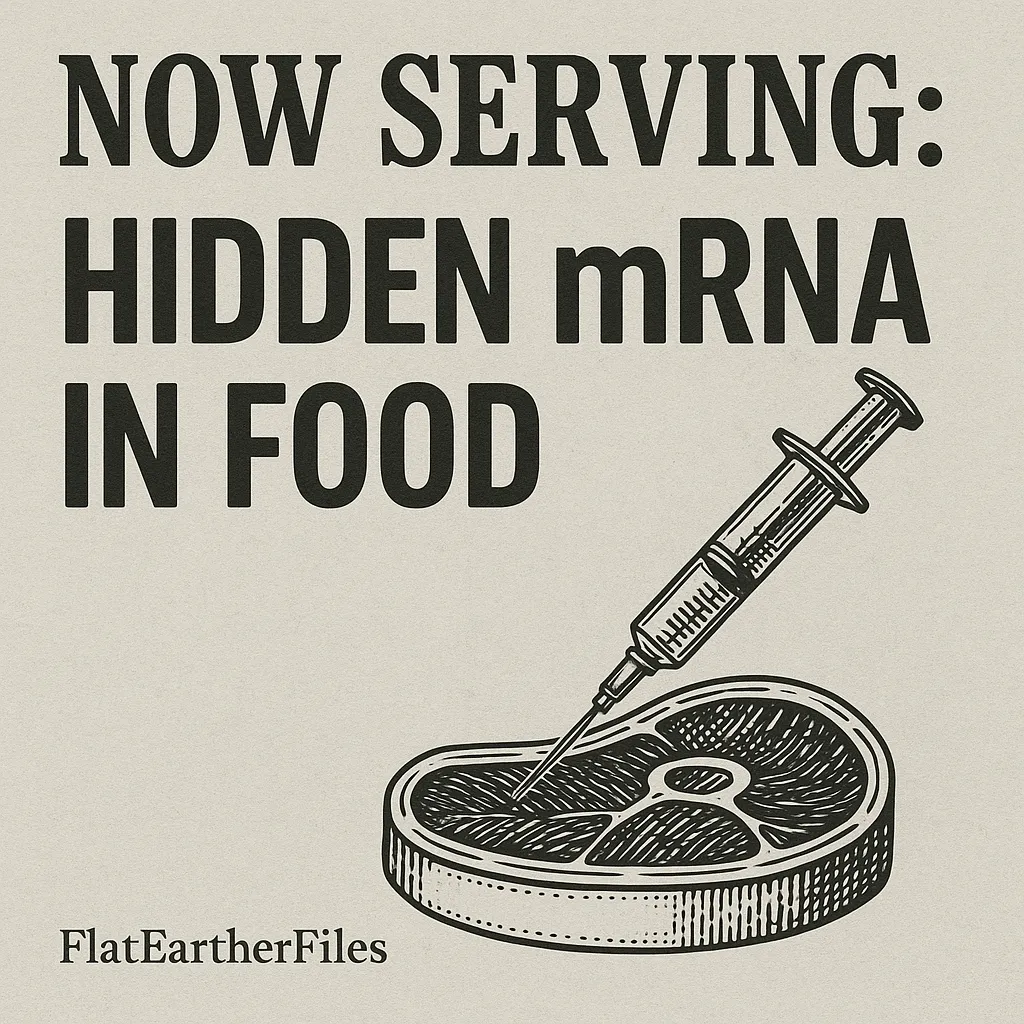
Ever wondered why your salad might be smarter than your cousin Dave? It could be the hidden mRNA in food. While that sounds absurd, this isn’t science fiction. It’s biotech creeping onto your plate—quietly, invisibly, and without your permission.
The Rise of Hidden mRNA in Food
First, they introduced mRNA into vaccines. Then, without fanfare, they began rolling it into farming. Today, mRNA-based treatments are already used on crops and animals. Moreover, you probably didn’t even know.
Companies claim it’s to prevent disease and reduce chemicals. However, this shift wasn’t driven by consumer demand. It happened behind closed lab doors, wrapped in jargon, and sold as progress.
Now, instead of transparency, we’re told to “trust the science.” Again.
Why Is Hidden mRNA in Food Not Labeled?
One would think new tech in food should be clearly labeled. Sadly, it’s not. In fact, labeling laws allow companies to skip disclosure if the food looks “normal.”
Therefore, your modified tomato or beef doesn’t need to come with a warning. Regulators argue it’s “substantially equivalent” to the original. Convenient, isn’t it?
Even worse, most labels now use QR codes. So unless you’re scanning every apple, you won’t know what you’re eating. That’s not consumer choice—that’s information control.
Science or Sci-Fi? The mRNA Meat Movement
At first glance, it sounds responsible: protect livestock from illness with mRNA. However, there’s little evidence these treatments are fully understood.
The industry says the mRNA breaks down before reaching your plate. Meanwhile, they offer no long-term studies to support that claim. Haven’t we heard this song before?
Additionally, no one seems eager to explain the process. They just assure you it’s safe. But when your burger comes with gene-coded history, maybe you deserve more than blind trust.
Even Veggies Aren’t Safe From Hidden mRNA in Food
You thought salad was your safe zone? Think again. Today, scientists use RNA sprays to reprogram how plants react to pests. This isn’t “natural.” It’s software updates for spinach.
These sprays don’t wash off. Furthermore, regulators fast-tracked them without thorough testing. Thus, your healthy kale smoothie may come with unlisted ingredients—of the molecular variety.
Still, no one talks about this in public. Supermarkets stay silent. Even farmers may not realize what’s inside these biotech “solutions.”
How Hidden mRNA in Food Might Affect Your Body
Your stomach digests food—not genetic instructions. So what does hidden mRNA in food do once consumed?
Researchers say it doesn’t affect you. But others argue we simply don’t know yet. While it’s likely the body breaks down some of it, that doesn’t guarantee zero risk.
Besides, shouldn’t we study it before mass consumption? After all, people once said lead paint was fine too.
It’s not fear—it’s common sense. When new tech enters the food chain, full disclosure should be the default. Ozempic & Reptile Venom: Facts vs Fiction
Who Benefits from All This? Spoiler: Not You
Clearly, someone profits. Spoiler alert: it’s not the shopper.
Corporations own the patents and the platforms. They promote this tech as essential for future food security. Meanwhile, they control supply chains and build dependency. You? You’re the test subject.
Even worse, if something goes wrong, they won’t face consequences. Their legal immunity is already baked in.
So while they sell mRNA food as a solution, remember—it’s one you didn’t ask for and can’t easily opt out of.
The Silence Is the Loudest Part
If hidden mRNA in food is so amazing, why does no one talk about it?
Regulators stay vague. Media outlets deflect. And companies flood search engines with “debunks” rather than real data.
In fact, mentioning mRNA in food sparks immediate “fact-checks,” often funded by the same interests pushing it. That’s not curiosity. That’s narrative control.
Public skepticism isn’t the problem. Secrecy is. The Dangers of Synthetic Food
Fortunately, there’s still power in your choices. Start by shopping local and organic when possible. Ask questions. Demand real answers.
In addition, push for food labeling laws that reflect current biotech practices. Transparency shouldn’t be optional—it should be required.
Finally, keep paying attention. Staying silent gives them permission to keep going unchecked.
Conclusion: Eat Smart, Question Hard
The growing presence of hidden mRNA in food isn’t about nutrition. It’s about control, experimentation, and secrecy. We’re not conspiracy theorists—we’re consumers who want clarity.
Questioning what’s on your plate doesn’t make you crazy. It makes you responsible. Keep reading labels. Keep asking questions. And never forget: real science invites scrutiny—it doesn’t silence it.
Hidden mRNA in Food – The Truth They Won’t Tell You
If you want a broader look at the science and research behind this topic, you may also find our article mRNA in our food useful. That post explores what is currently known, what researchers are developing, and why transparency around new agricultural technologies matters for consumers.