
.svg)

Global Warming Control – Saving the Planet or Controlling You?
We hear the phrase global warming control everywhere these days. It’s blamed on your commute, your flights, and even cows in the field. But when you look closely, the story isn’t as straightforward as politicians and campaigners would have you believe. The oceans, volcanoes, and natural cycles all play huge roles, yet we’re told to focus on car journeys and Sunday roasts. Perhaps global warming control isn’t only about saving the planet – maybe it’s also about controlling you.
The ULEZ Cash Cow Dressed as Clean Air
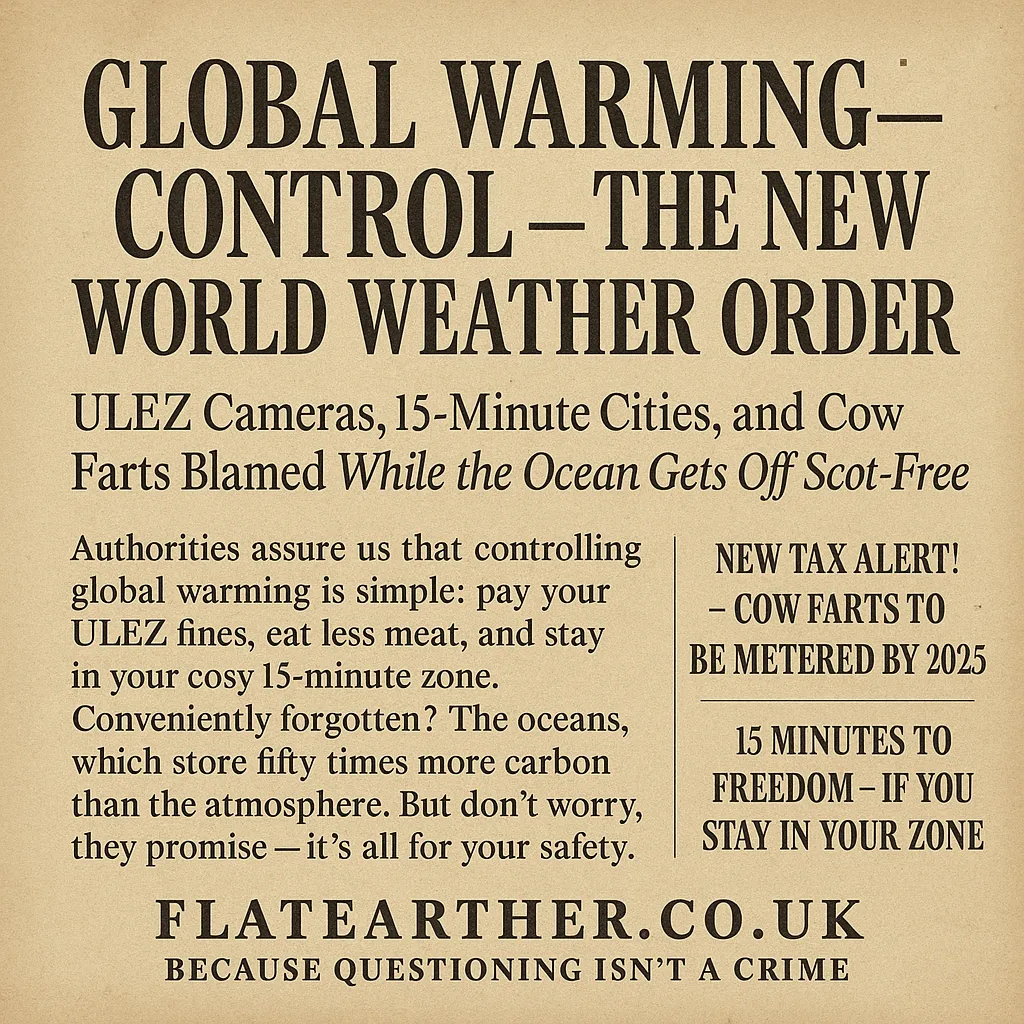
Take London’s ULEZ scheme. Marketed as a clean-air initiative, it’s become a classic example of global warming control. Cameras line the streets, every number plate is logged, and motorists are hit with charges for daring to drive an older car. Of course, who wouldn’t want cleaner air? But behind the noble message sits a convenient cash stream. It’s less about carbon footprints and more about controlling movement. Pay the toll or stay at home.
ULEZ is being mirrored in other cities too. Under the banner of climate action, the pattern is the same: new fees, more surveillance, and restrictions sold as “green.” Global warming control suddenly looks very profitable.
15-Minute Cities – Convenience or Corralling?
The 15-minute city is another piece of the puzzle. On the surface, it sounds like a modern utopia: everything you need within a short stroll. Shops, schools, doctors, all close by. Who could argue with that?
But this idea, tied into global warming control plans, carries a darker undertone. Once zones are set, it’s not hard to imagine digital fences, travel permits, or even carbon allowances linked to your movements. What begins as “convenience” can quietly turn into control. The cameras aren’t just for traffic – they’re watching boundaries.
It’s a subtle shift: from encouraging local living to restricting wider freedom. The line between smart planning and social engineering blurs quickly.
Agenda 2030 – The Masterplan with a Smile
Agenda 2030, the UN’s big sustainability framework, ties all this together. Its goals sound positive: clean energy, sustainable cities, reduced emissions. Who doesn’t want a healthier planet? But in practice, the measures linked to global warming control often shape daily life in ways that feel less about saving nature and more about monitoring people.
Policies inspired by Agenda 2030 influence housing rules, farming regulations, and transport systems. Step by step, the same pattern appears: centralised plans dressed as community benefit, while individual choice shrinks. The smiley language of “sustainability” hides a growing digital net.
Carbon Myths – Cows vs. Oceans
Here’s the twist few mention: the oceans are the real giant in the carbon cycle. They store around fifty times more carbon than the atmosphere. Warmer water releases it, cooler water absorbs it. That ebb and flow dwarfs the impact of cattle or cars.
Yet global warming control discussions rarely highlight this. Instead, we hear endless talk of cows farting, burgers on your plate, and your family holiday flights. Why? Because these are areas governments can tax, regulate, and use as tools of control. You can’t put a levy on the Pacific Ocean, but you can put one on a dairy farm.
By focusing on livestock, cars, and planes, the narrative becomes a tool for compliance. Meanwhile, the biggest carbon player on Earth – the sea – is conveniently pushed to the background.
Conclusion – Global Warming Control or People Control?
Global warming control may sound like a noble mission to save the planet, but look past the slogans. ULEZ zones turn into cash machines, 15-minute cities can slip into digital corrals, and Agenda 2030 often feels more like a management plan for humans than a rescue plan for Earth. Add the selective science – cows over oceans – and you start to see the pattern.
Of course, perhaps it’s all coincidence. Maybe global warming control really is just a giant cuddle from above. But when freedom is slowly swapped for surveillance under the green banner, the question remains: is this really about the climate, or is it about controlling you?