.svg)


Hidden subliminal messages and the art of influence
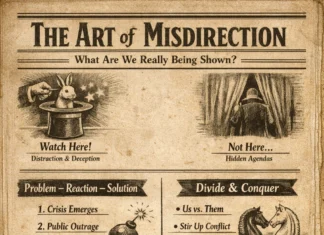
We like to think we make our own choices, but what if our decisions are shaped before we notice? The world of hidden subliminal messages has always danced on the edge of ethics, sliding beneath awareness to plant subtle suggestions. From film screens to cereal boxes, the language of influence hides in plain sight.
The story begins in the 1950s when a marketing researcher named James Vicary claimed to have flashed the phrases “Drink Coca-Cola” and “Eat Popcorn” for fractions of a second during a cinema showing in New Jersey. He said sales soared. The catch? It was later revealed as an exaggeration — maybe even a hoax. Yet, despite this confession, the idea took hold. Coca-Cola became permanently linked to the concept of hidden subliminal messages, and advertisers across the world began to take note.
Governments soon stepped in. The United States Federal Communications Commission announced that such tactics, if proven, would be “contrary to the public interest.” Britain followed with similar warnings. By the 1970s, most countries had technically banned subliminal messaging — but “technically” is doing a lot of heavy lifting.
After all, what counts as hidden? Are We Really Free? | The Illusion of Modern Freedom
Hidden subliminal messages in everyday life
Look around any supermarket shelf or music video, and you might notice patterns that don’t feel accidental. Logos that resemble eyes, colour gradients mimicking hypnotic spirals, or product designs pointing toward appetite, desire, or authority. Modern advertising evolved beyond flashing words on screens. It now works through shapes, sounds, and rhythms. The Frequency of Thought – How Mind Energy Shapes Reality
The hidden subliminal messages of today may not appear as single frames. They could be emotional triggers buried within sound frequencies, image composition, or even the pace of an edit. Research shows that repetition and rhythm influence the subconscious faster than spoken reasoning. When we hum along to an advert’s jingle without remembering its words, we’ve already received the message.
Even language plays a part. Phrases like “treat yourself,” “you deserve it,” or “don’t miss out” aren’t just words — they’re emotional codes designed to override logic. They appeal to impulse and identity, not information.
Hidden subliminal messages in politics and pop culture
Advertising may have introduced the concept, but politics perfected it. Campaigns began embedding emotional cues in slogans and colours. Blue for trust, red for urgency, gold for strength — subtle but powerful. Film studios followed suit, using symbols, camera angles, and music to elicit specific emotional responses before the viewer even understands why.
The hidden subliminal messages within pop culture work quietly. An upside-down logo, a faint whisper in a song, or a recurring triangle motif may seem artistic, yet everything has intention. Even social media algorithms can act as subliminal tools, guiding what we see, when we see it, and how long we look.
Hidden subliminal messages: outlawed but ever-present
Officially, subliminal advertising remains banned in the UK and the United States. However, proving its use is almost impossible. Digital editing tools make these techniques subtle beyond detection. They no longer rely on a single frame — instead, they blend into the emotional rhythm of a scene or sound.
Big brands continue to hire behavioural psychologists to craft messaging that bypasses reason. The goal isn’t to hypnotise but to “nudge” — a friendlier modern term for manipulation. Whether it’s a soft light on a bottle, a heartbeat tempo in background music, or a slogan that triggers memory recall, the principle remains the same. The mind absorbs before it analyses.
So, even though hidden subliminal messages are supposedly outlawed, their spirit lives on — in product packaging, cinematic symbolism, and digital feeds fine-tuned to our emotions. The influence may be invisible, but the results are measurable.
The irony of awareness
The moment you learn about hidden subliminal messages, they lose some of their power. Awareness breaks the spell. You start to see the patterns — the repeated imagery, the careful colour choices, the rhythm of persuasion. And once you notice them, you can’t unsee them.
That awareness is the modern rebellion: paying attention in a world that profits from distraction. Perhaps that’s why the topic remains uncomfortable for advertisers and broadcasters. If the public looked too closely, they might recognise how much control they’ve already surrendered.
The next time you find yourself drawn to a product, a jingle, or a film scene that feels familiar, ask yourself — is it genuine attraction or carefully engineered influence? In an age where even data acts as currency, perhaps the real message was never hidden.