



.svg)


Are We Being Watched More Than We Think?
If you have ever paused mid-conversation and wondered, are we being watched, you are not alone. In truth, the modern eye never blinks. From the router on your wall to the phone in your pocket, silent systems monitor your every move. We traded convenience for observation without reading the small print.
Once upon a time, surveillance meant cameras on street corners. Today, it means microphones in smart speakers, GPS in cars, and motion sensors in lightbulbs. Our homes, workplaces, and towns pulse with data — every click, swipe, or spoken word recorded somewhere “for security reasons.”
The phrase are we being watched no longer sounds paranoid. It sounds like the most reasonable question you could ask in 2025.
Are We Being Watched – The Network That Never Sleeps
Behind every glowing screen sits a digital observer. When you stream a film, your TV logs preferences. When you send a message, metadata tags your time and location. Even a voice assistant listening for “Hey” or “Alexa” never truly turns off.
Routers collect device histories. Smart thermostats share energy data. Your fridge may one day alert marketing systems when you are low on milk. This constant exchange builds a living map of habits. It knows when you wake, when you work, and when you rest.
So, are we being watched? The evidence sits right there in your pocket.
Moreover, the outdoor world joins in. CCTV tracks streets and junctions, drones patrol events, and satellites record cities from above. Artificial intelligence then sorts faces, reads number plates, and predicts behaviour. The human observer is no longer needed; the system watches itself. The 2020 Obedience Experiment | Hidden Truths Behind 2020
Are We Being Watched – Home Devices – The Friendly Spies
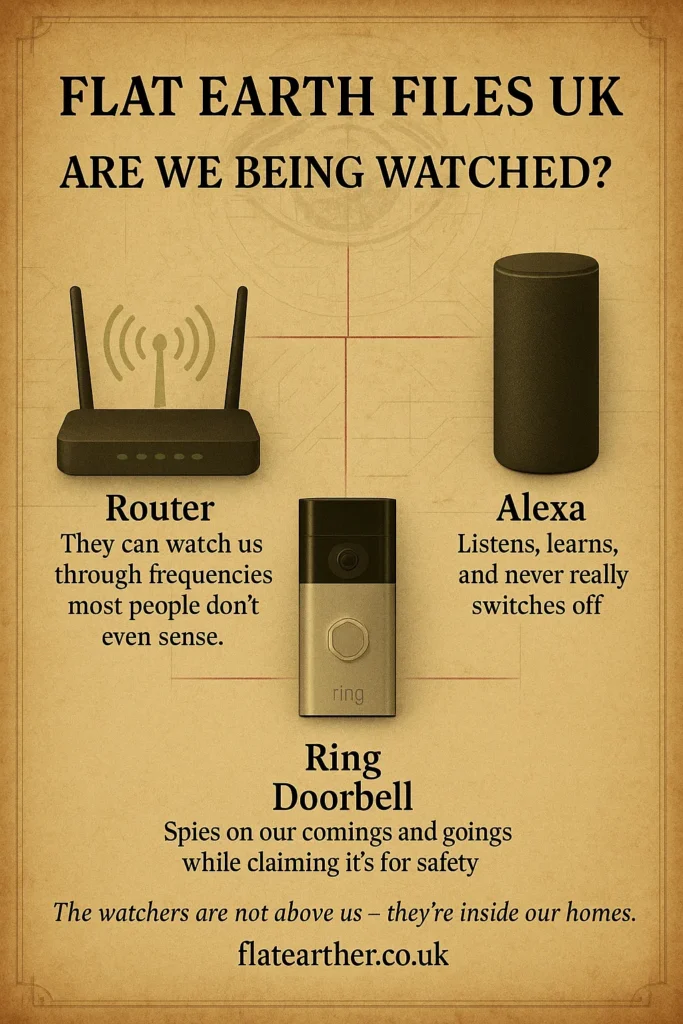
We invited surveillance inside willingly. Smart speakers, doorbell cameras, and Wi-Fi-enabled gadgets promised convenience. They respond quickly, play music, show deliveries, and heat our homes before we arrive. Yet every friendly function comes with a trade-off.
Each command is stored, each clip uploaded “to improve service.” But improved for whom? Data becomes currency, traded between corporations and agencies. That cheerful light on your smart assistant is more than decoration — it is confirmation that the device is listening.
It seems strange that we buy the very tools that track us. Still, many justify it: what harm can it do if I have nothing to hide? The harm lies not in being known, but in being profiled — reduced to patterns a system can predict and influence.
The deeper question remains: if the technology can record everything, who decides what to use? Once again, we circle back to are we being watched — and by whom.
The Invisible Hand of the Digital Age
Phones changed the meaning of privacy entirely. Each tap, photo, or route adds to a cloud of behavioural data. Apps request permissions far beyond their purpose. A flashlight may want access to your contacts; a game might track your location. We accept the terms and rarely read them.
Telecom providers store call records. Search engines profile thoughts. Even health trackers know when your heart races. Combined, these fragments paint a picture far more revealing than any diary.
If you still ask are we being watched, remember: the observer no longer wears a uniform or badge. It wears an algorithm.
The Router That Knows You Best
Routers, often overlooked, act as gateways for everything digital. They log device addresses, connection times, and browsing data. While many believe their Wi-Fi is private, the path to the wider web passes through corporate networks. Those networks feed analytics systems and, at times, government databases.
Manufacturers collect diagnostics to “improve performance.” ISPs monitor traffic to “optimise speed.” Yet both generate insight about daily routines — when you log on, how long you stream, even when you sleep.
Every online action creates a breadcrumb. Follow enough of them and a clear story emerges. Whether intentional or incidental, observation is constant. That is why are we being watched feels less like paranoia and more like a quiet fact.
The Bigger Picture – Surveillance as Control
The web of watchers extends far beyond homes. Global satellite networks map terrain, track movement, and even monitor crops. Cities install AI cameras to measure crowd flow. Retail stores use facial recognition for “customer service.” Banks flag “unusual activity” based on algorithms that know your spending rhythm better than you do.
Together, these layers form what some call the digital panopticon — a world where privacy becomes optional, and silence becomes suspicious.
We once believed technology would free us. Instead, it built an invisible cage wrapped in convenience. The cage feels comfortable, efficient, and helpful — until you realise the door only opens one way.
What Can We Do About It?
Awareness is the first defence. Cover cameras when not in use. Review device permissions. Use wired connections where possible. Update firmware, but also understand what you update into. Disconnect when you can; observe who observes you.
Refusing total connectivity may seem rebellious, yet it restores balance. Remember, power grows where people stop questioning. Asking are we being watched keeps curiosity alive, and that curiosity is our greatest shield.
Final Thoughts – Eyes Everywhere
Surveillance has shifted from streets to living rooms. We exchanged privacy for convenience, and the trade was quiet but complete. Still, awareness turns the tide. Each mindful choice breaks one tiny link in the chain.
Next time a device asks for access, pause. Ask yourself the simplest question — are we being watched, and is it worth the view?
Stay aware. Stay curious.
🌍 flatearther.co.uk


