


.svg)


The Illusion of Wellness – How Health Became a Marketing Trick
Every few months, a new miracle product claims to hold the key to perfect health. Detox teas, biohacking gadgets, and “smart” supplements flood the market with promises of balance and vitality. People rush to try them all, yet somehow most still feel anxious, tired, and disconnected. That’s the illusion of wellness — the convincing performance of progress without genuine healing. Ozempic & Reptile Venom: Facts vs Fiction
Modern culture trains us to see health as something we can buy. We follow plans, download tracking apps, and take the latest injections, believing the next fix will bring peace. Each purchase feels empowering at first, but the control fades quickly. Real wellness was never meant to be a transaction. It grows naturally through awareness, balance, and connection.
The illusion of wellness exists because profit depends on it. Every system that sells “solutions” quietly creates dependency. People keep coming back, not because they’re healthier, but because they’ve forgotten how to live without constant instruction.
The Illusion of Wellness in Modern Times
The phrase “the illusion of wellness” perfectly describes today’s health landscape. Wellness once meant simplicity — fresh air, clean food, sunlight, and rest. Now, it’s a corporate brand built on algorithms, fear, and fashion. Wellness isn’t guided by wisdom anymore; it’s curated by marketing teams.
This shift didn’t happen by chance. It grew alongside the digital age, where convenience replaced intuition. Each new innovation promised to make life easier but ended up making people dependent. When your watch tracks your heartbeat, your phone tells you when to breathe, and your food comes with barcodes, autonomy fades. Convenience becomes control, and control becomes consumption.
The illusion thrives because it feels comfortable. Advertisements encourage people to outsource responsibility. Instead of listening to their bodies, they listen to brands. Instead of tuning into nature, they tune into notifications. Health becomes a subscription, and balance turns into a buzzword.
When Wellness Became a Commodity
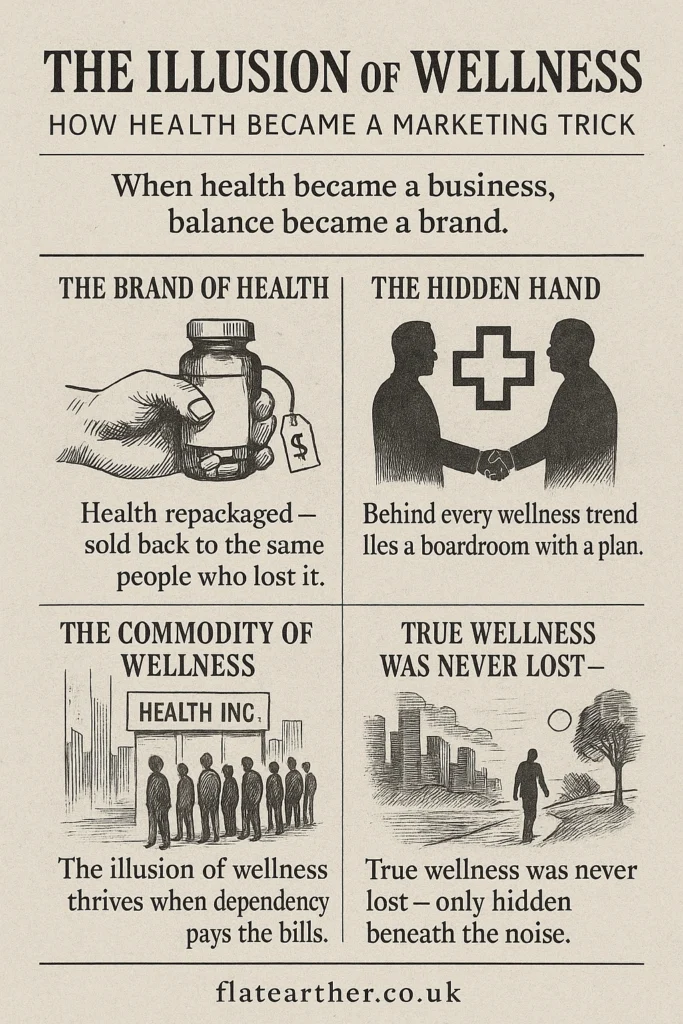
Wellness lost its meaning when it became a commodity. The global wellness industry now generates trillions every year, selling people versions of what they already own — their health, their breath, their time. The same corporations that created imbalance through processed foods now repackage “detox” as salvation. The cycle feeds itself endlessly.
The illusion of wellness succeeds because it disguises manipulation as motivation. Companies use empowerment language to sell dependency. They speak of “self-care” while designing systems that keep people chasing perfection. Instead of balance, people find themselves caught in constant comparison.
Meanwhile, nature’s solutions remain free. Rest costs nothing. Movement requires no membership. Hydration and sunshine don’t come with brand logos. The irony is that real wellness has always existed outside the system that sells it. The moment health became profitable, honesty disappeared.
The Hidden Hand Behind Health
Behind the smiling ads and wellness slogans, there’s a clear agenda. Investors and pharmaceutical giants fund the very platforms that shape opinions about health. Media outlets echo their messaging, ensuring that the same corporations control both the problem and the cure. This isn’t paranoia — it’s policy.
Through the illusion of wellness, people are quietly trained to surrender control. They’re taught to fear their own instincts and trust pre-packaged routines instead. The body, designed to adapt and heal naturally, becomes seen as fragile and defective. Every perceived flaw becomes a marketing opportunity.
However, once people start questioning who benefits from their anxiety, the illusion begins to unravel. The truth is simple: wellness was never lost, just buried under distractions. Nature still provides every element needed for equilibrium — air, movement, light, and stillness. Those who reconnect with those basics rediscover what wellness truly means.
Escaping the Illusion of Wellness
Awareness destroys the illusion of wellness faster than any product can maintain it. Once you understand the manipulation, you regain power. Real health begins with curiosity, not consumption. It doesn’t require technology or complicated diets; it requires presence and patience.
The first step is to reclaim responsibility. Question the experts who rely on fear to sell advice. Ask who gains when society believes health is too complex to manage alone. Start noticing how natural you already are — breathing, moving, healing without permission. Those moments of awareness are acts of rebellion in a culture that thrives on distraction.
Reconnecting to nature dissolves dependency. Walk more, sleep deeply, eat simply, and think critically. Every step away from artificial wellness is a step toward truth. The system loses control the moment people stop participating in its illusion.
True wellness isn’t trendy or exclusive. It’s not found in a clinic or a hashtag. It lives quietly in balance — a rhythm of body, mind, and environment that asks for nothing but consistency.
So next time a company offers a shortcut to health, pause and reflect. If it requires a contract or constant purchase, it’s likely part of the illusion of wellness. Genuine health doesn’t demand loyalty; it rewards awareness.
You don’t need to find wellness. You only need to remember it.


