




.svg)


mRNA in our food – Why people are starting to ask questions
Over the past few years, many people have started asking whether mRNA in our food could become a reality. After the rapid rollout of mRNA technology during the pandemic, public awareness of genetic technologies increased dramatically.
As a result, people now look at biotechnology in agriculture with a more questioning mindset. Meanwhile, scientists are exploring RNA technologies in livestock medicine, crop protection, and plant-based vaccines.
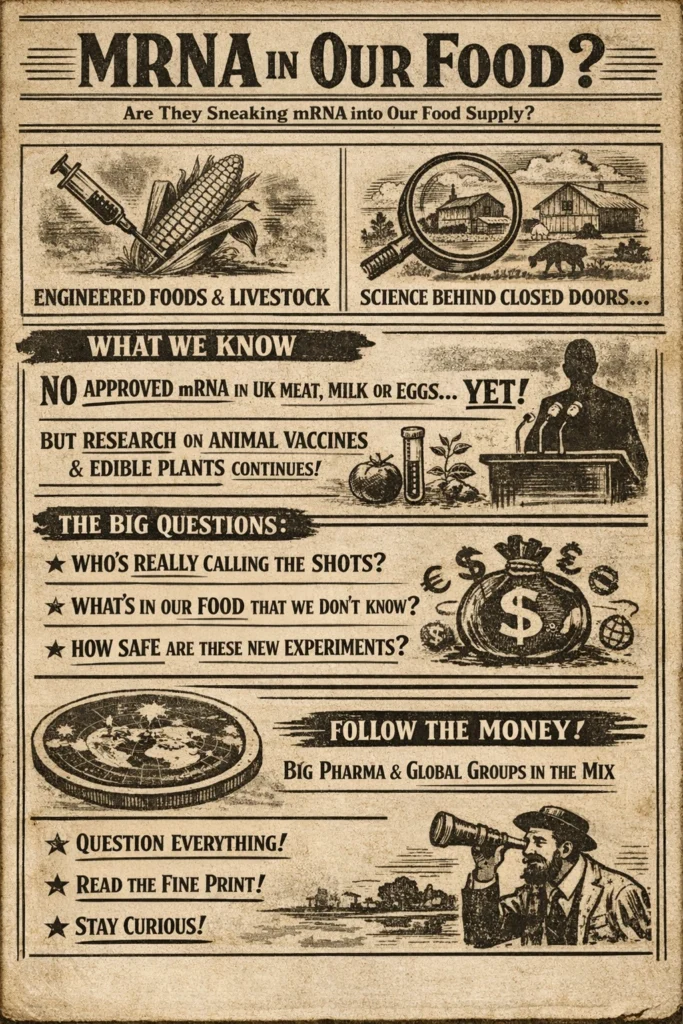
However, the official line from regulators remains clear. At present, there are no authorised veterinary medicines in the UK containing mRNA as an active ingredient used in food-producing animals. That means supermarket meat, dairy, and eggs are not currently approved as mRNA-treated products.
Nevertheless, research in this field continues to grow quickly. Therefore, it is understandable why many people remain curious about where this technology may lead.
mRNA in our food – Research happening behind the scenes
Scientists around the world are studying ways RNA technology could help agriculture. These projects include disease protection in livestock, crop protection methods, and even edible vaccines produced in plants.
For example, researchers are exploring mRNA vaccines for animals such as cattle, pigs, poultry, and goats. These studies aim to protect livestock from infectious diseases that can damage food production.
Meanwhile, other scientists are working on RNA-based crop protection. Instead of traditional chemical pesticides, researchers are testing RNA interference (RNAi) sprays that silence genes in insects or plant pathogens.
Although RNAi is not identical to mRNA technology, it still represents a shift toward genetic-based agricultural tools. Therefore, biotechnology companies see RNA as a new frontier for farming.
At the same time, researchers have also experimented with plants such as lettuce, tomatoes, and duckweed that can produce vaccine proteins. These are sometimes described as plant-based or edible vaccines.
Even so, most of this work remains in the research stage rather than everyday food production.
Why oral delivery of mRNA is not simple
One of the biggest scientific challenges involves getting fragile genetic molecules through the digestive system. The stomach and gut naturally break down RNA quickly.
Because of this, scientists investigating oral RNA delivery are developing special protective systems. These include lipid nanoparticles, plant vesicles, or protective capsules designed to prevent degradation.
In other words, delivering active mRNA through food is far more complicated than simply adding it to a crop or animal feed.
Therefore, although research exists, turning these technologies into working food-delivery systems still requires significant development.
Why transparency matters when discussing mRNA in our food
Whenever new biotechnology enters the food chain, transparency becomes extremely important. Consumers naturally want to know what is being researched, tested, and approved.
Clear regulation, open communication, and honest labelling help maintain public trust. Without transparency, speculation and mistrust quickly grow.
Many people already feel cautious because of the rapid rollout of new medical technologies in recent years. As a result, discussions around mRNA in our food often attract strong opinions.
From a scientific perspective, the most sensible approach involves asking careful questions rather than dismissing concerns outright.
Questions worth asking include:
-
What technologies are currently being researched in agriculture?
-
What regulatory approvals exist for livestock or crops?
-
How are safety trials conducted before approval?
-
Will future products require clear labelling for consumers?
Open answers to these questions would help maintain trust between the public, scientists, and regulators.
Looking ahead
The idea of mRNA in our food sits at the intersection of biotechnology, agriculture, and public trust. At the moment, there is no confirmed evidence that authorised food products contain mRNA-based treatments.
However, research in RNA technologies for farming is clearly advancing. As with many emerging technologies, development may happen gradually rather than suddenly.
Therefore, keeping an open but questioning mindset remains sensible. Scientific progress can bring useful innovations, yet transparency and careful oversight must always accompany new technologies entering the food chain.
For now, the discussion around mRNA and agriculture continues to evolve. As more research emerges, the conversation about biotechnology and our food will likely become even more important in the years ahead.
A final thought worth considering
History shows that many technologies and food ingredients were once introduced with great confidence, only for deeper debates to appear years later. Sometimes concerns prove justified, and sometimes they do not. What matters most is that the public keeps asking questions.
When powerful industries, global organisations, and governments work closely together, transparency becomes even more important. People naturally want reassurance that decisions affecting health and food supply are made openly and with full public scrutiny.
So perhaps the real takeaway is not fear, but awareness.
Ask questions.
Read the evidence.
Follow the money when necessary.
And most importantly, stay curious.
After all, a well-informed public has always been the strongest safeguard against mistakes in science, politics, or industry.
For readers who want to dig deeper into the more controversial side of the debate, we have also explored the subject from another angle. In Hidden mRNA in Food – The Truth They Won’t Tell You, we look at the concerns, suspicions, and unanswered questions that have led many people to question whether emerging food technologies are being fully disclosed to the public.


