




.svg)


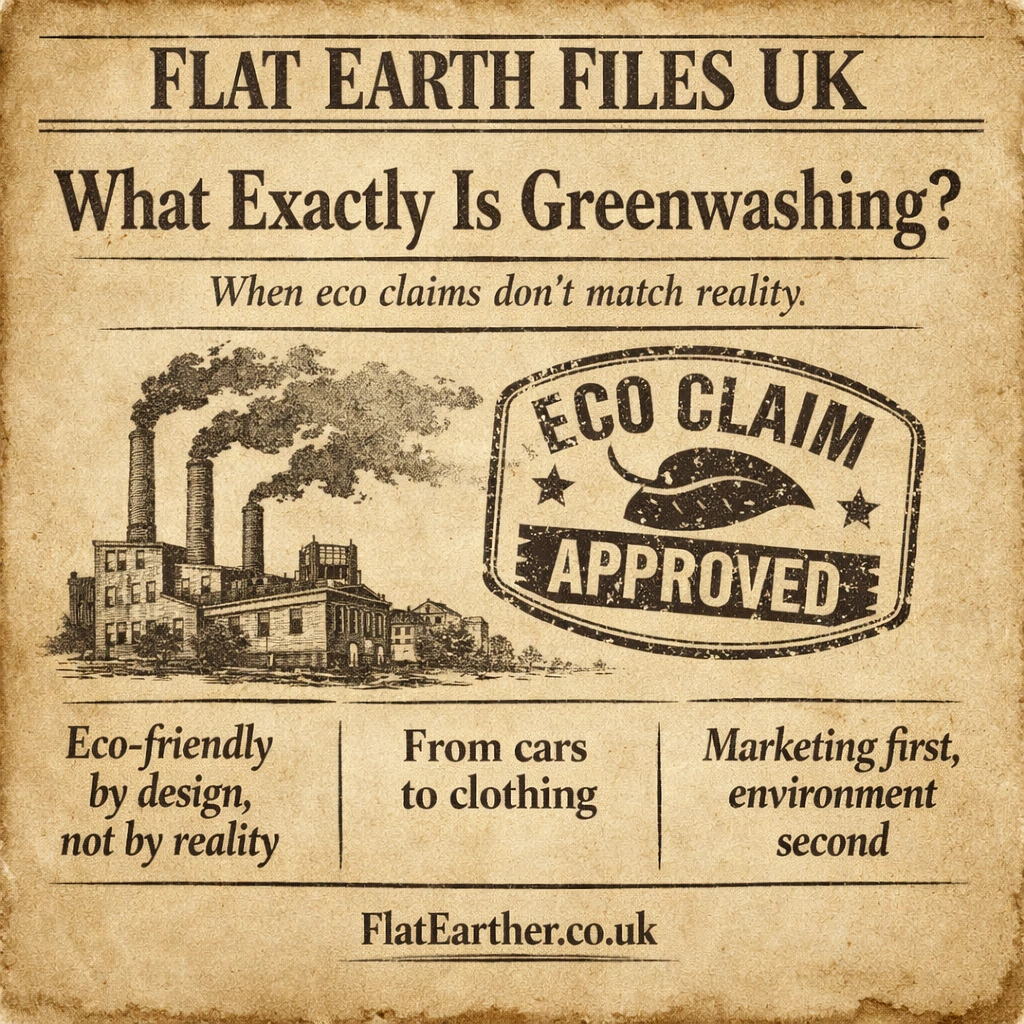
What Exactly Is Greenwashing?
What exactly is greenwashing, and why does it keep appearing every time big corporations start talking about the planet? On the surface, greenwashing looks like progress. However, once you dig a little deeper, the story often changes.
Greenwashing is not a fringe idea or a conspiracy theory. Instead, it is a recognised marketing practice that has been exposed repeatedly across multiple industries. From cars to clothing, companies have learned that sounding eco-friendly sells. Therefore, the temptation to stretch the truth has become hard to resist.
This article breaks down what exactly is greenwashing, how it works, and why so many well-known brands have been caught out.
Here is another example of greenwashing. Big Pharma Deceit: How Rockefeller Hijacked Natural Medicine
What Exactly Is Greenwashing and How Does It Work?
What exactly is greenwashing in simple terms? It happens when a company presents itself as environmentally responsible without making meaningful changes to its practices. In other words, the branding goes green, but the behaviour stays the same.
Often, this is done through vague language. Words like “eco”, “sustainable”, or “planet-friendly” sound reassuring. However, they are frequently undefined. As a result, consumers are left filling in the gaps with assumptions.
Sometimes, greenwashing focuses on one small improvement while ignoring the bigger picture. For example, a brand may highlight recyclable packaging while remaining silent on polluting manufacturing processes. Therefore, the message feels positive, even though the overall impact has barely changed.
What Exactly Is Greenwashing in the Real World?
To understand what exactly is greenwashing, real examples help more than theory.
One of the most famous cases is Volkswagen. For years, VW marketed its diesel cars as clean and environmentally friendly. However, it later emerged that software had been installed to cheat emissions tests. As a result, cars performed well in laboratories while polluting far more on the road. This scandal, often called Dieselgate, showed how far greenwashing could go when profits were at stake.
The fallout was enormous. Fines ran into the billions, and public trust was damaged worldwide. Importantly, this was not a misunderstanding. It was a deliberate attempt to appear greener than reality.
Fashion, Retail, and the Green Image
Greenwashing is not limited to the automotive industry. In fact, fashion and retail have become hotspots for eco-friendly messaging.
Many clothing brands now promote “conscious” or “sustainable” ranges. However, critics have pointed out that these collections often make up a tiny fraction of overall production. Meanwhile, fast-fashion volumes continue to rise. Therefore, the green image can distract from the scale of the environmental impact.
Marks & Spencer has also faced criticism over sustainability claims. While the company has introduced genuine environmental initiatives, some campaigns have been accused of overstating benefits. This highlights an important point. A brand can do some good things while still engaging in greenwashing at the same time.
Why Greenwashing Keeps Happening
So why does greenwashing persist if people are aware of it? The answer is simple. It works.
Consumers want to make better choices. Therefore, eco-friendly messaging taps directly into that desire. At the same time, changing entire supply chains is expensive and slow. As a result, marketing often moves faster than reality.
There is also the issue of accountability. Environmental claims are not always regulated clearly. Consequently, companies can operate in a grey area, knowing that few consumers will investigate deeply.
What Exactly Is Greenwashing Doing to Public Trust?
What exactly is greenwashing doing beyond misleading labels? Over time, it erodes trust. When people discover that eco claims are exaggerated, scepticism grows. Unfortunately, this can spill over onto genuinely responsible businesses.
Moreover, greenwashing shifts responsibility onto individuals. Consumers are told that buying the “right” products will save the planet. Meanwhile, large-scale industrial pollution continues largely unchanged. Therefore, attention moves away from systemic issues and onto personal guilt.
How to Spot Greenwashing Yourself
Understanding what exactly is greenwashing helps people spot it more easily. There are a few common signs to watch for.
First, look for vague claims with no data. Secondly, check whether only one small aspect is highlighted. Thirdly, notice whether certifications or independent verification are missing. Finally, be cautious of heavy green imagery with little substance behind it.
Asking simple questions often reveals a lot. What has actually changed? How is this measured? Who benefits most from the claim?
Final Thoughts on What Exactly Is Greenwashing
What exactly is greenwashing comes down to one thing: appearance over action. It is the art of looking responsible without doing the hard work that responsibility requires.
That does not mean all eco products or initiatives are fake. However, it does mean blind trust is unwise. Questioning claims is not negativity. It is common sense.
In a world full of marketing noise, awareness is the real power. Once you understand greenwashing, the glossy slogans lose their grip. And that, mate, is where informed choice begins.


