




.svg)


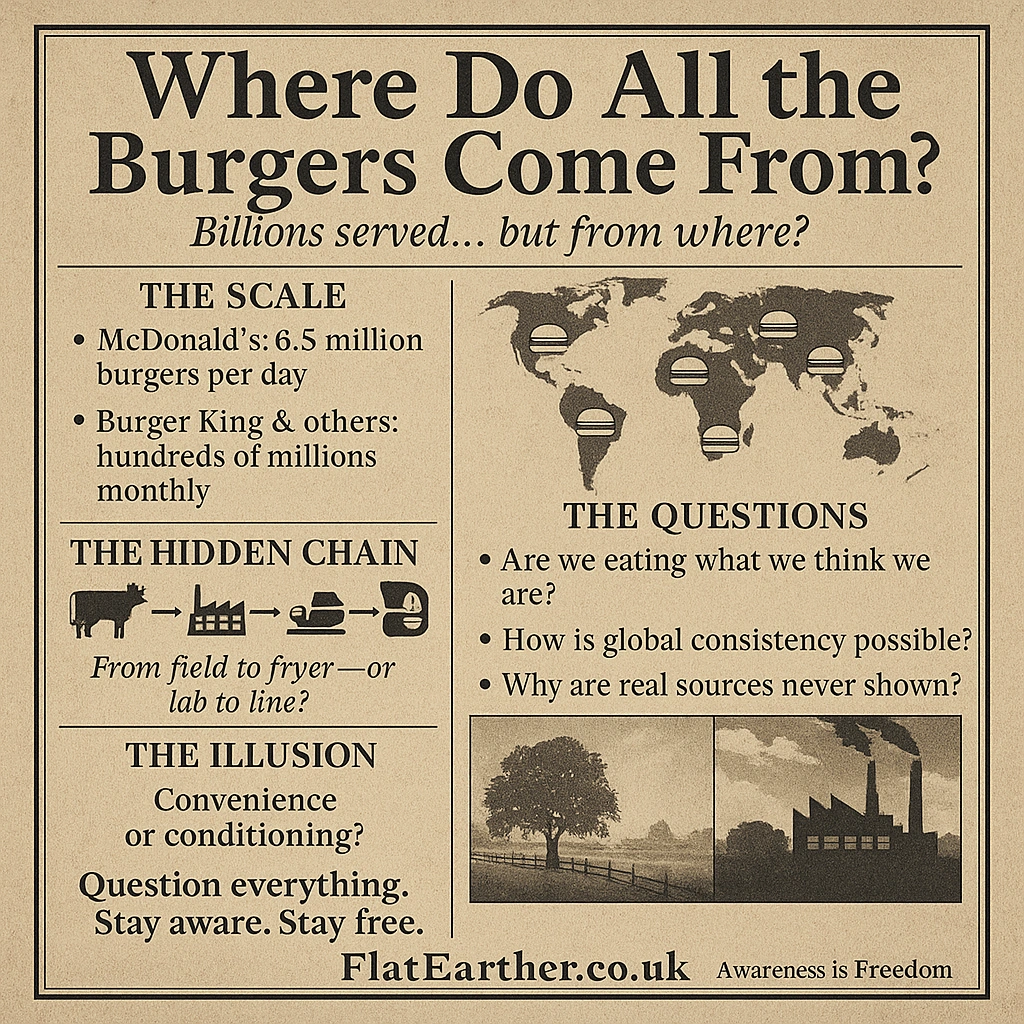
Where Do All the Burgers Come From? The Scale We Ignore
We queue, we tap, and we eat. The system hums along. Yet the numbers stagger the mind. McDonald’s alone moves millions of burgers daily. Add Burger King and countless others, and the volume becomes unbelievable. People accept the packaging and the slogans. However, the scale begs a simple question that rarely gets asked: where do all the burgers come from?
The global meat machine runs like clockwork. Ranches feed processors. Processors feed distribution networks. Then restaurants flip identical patties by the billion. Marketing shows sunlit fields and smiling farmers. Reality looks more like industrial choreography. Everything must remain consistent, fast, and predictable across continents.
Moreover, uniformity rules. The patty in London mirrors the patty in Lima. Temperature curves, grind size, fat ratios, and seasoning remain tightly controlled. Therefore, production demands astonishing throughput. At this point, people wonder quietly, where do all the burgers come from when land, animals, and time have limits?
Still, the illusion persists. Ads sell comfort. Menus sell speed. Meanwhile, the back end remains largely invisible. Cameras visit kitchens, not factories. Influencers sample sauces, not supply chains. Consequently, the public sees wrappers, not origins, and questions fade.
Where Do All the Burgers Come From? The Supply Chain Mirage
Consider logistics. Beef travels from mega-ranches to processing plants, then through chilling, grinding, shaping, and flash-freezing. Next, refrigerated trucks push pallets to regional hubs. Finally, stores receive boxes that fit grills down to the second. Every step removes variance and adds control.
However, control invites another thought. If consistency is king, what happens when nature varies? Droughts, disease, transport disruption, or policy changes can squeeze supply. Yet the counters rarely slow. Therefore, many suspect buffering strategies we seldom hear about.
Some firms test lab-grown meat, protein isolates, and flavour systems. The pitch is sustainability and efficiency. But once processes scale, would the average eater notice? Labels can soothe while saying little. Terms like “beef product,” “protein blend,” or “flame-grilled taste” sound reassuring. They also blur the line between food and formulation. People keep eating. The machine keeps moving. The dangers of synthetic food.
Are We Eating What We Think?
Speed erases curiosity. Lunch arrives between pings and notifications. Moreover, the modern day trains us to choose convenience first. We scan, we bite, and we move on. In truth, attention spans feed the system as surely as cattle do.
Yet questions matter. Ask where do all the burgers come from, and other questions follow. How many facilities would this scale require? Where are the genuine mega-ranches on film? Why do we see kitchens, but rarely see sources? Furthermore, why does every story end at the counter, never at the gate?
Fast Food, Fast Forgetting
The faster the meal, the quicker the memory. That is the trick. While people rush, supply chains perfect their invisibility. Meanwhile, messaging frames abundance as normal and scrutiny as strange. Also, cheapness becomes a virtue that silences doubt.
I don’t eat fast food. I choose real ingredients, steady energy, and clarity. However, this isn’t about my plate; it’s about honest sight. Once you pause, you start noticing the choreography. Then you recognise how convenience can become conditioning.
Therefore, the question — where do all the burgers come from — becomes a lens. Through it, you see throughput, uniformity, and narrative control. You also see how industry prefers mystery. After all, mystery prevents friction, and friction slows sales.
The Illusion of Abundance
Maybe this was never only about cows. Perhaps it is about a stage show. Billions of identical items appear daily, wrapped, warm, and familiar. However, few can trace a single one back to origin with certainty. That seamlessness feels like magic because it is designed to.
So, take a breath next time a perfect patty appears. Ask gently, where do all the burgers come from? Then watch how quickly the camera cuts away. Awareness does not demand outrage. It simply asks for sight.
Question everything. Stay aware. Stay free.


